Conductor's Note
As the excitement of a new season begins, I can think of no better way to launch the Rome Symphony Orchestra's 105th anniversary season — A Legacy in Sound — than with a program that celebrates beauty, brilliance, and extraordinary artistry. Thank you for joining us for what promises to be a truly memorable evening!
If you haven't already, consider becoming a season subscriber so you can experience every concert in this landmark season.
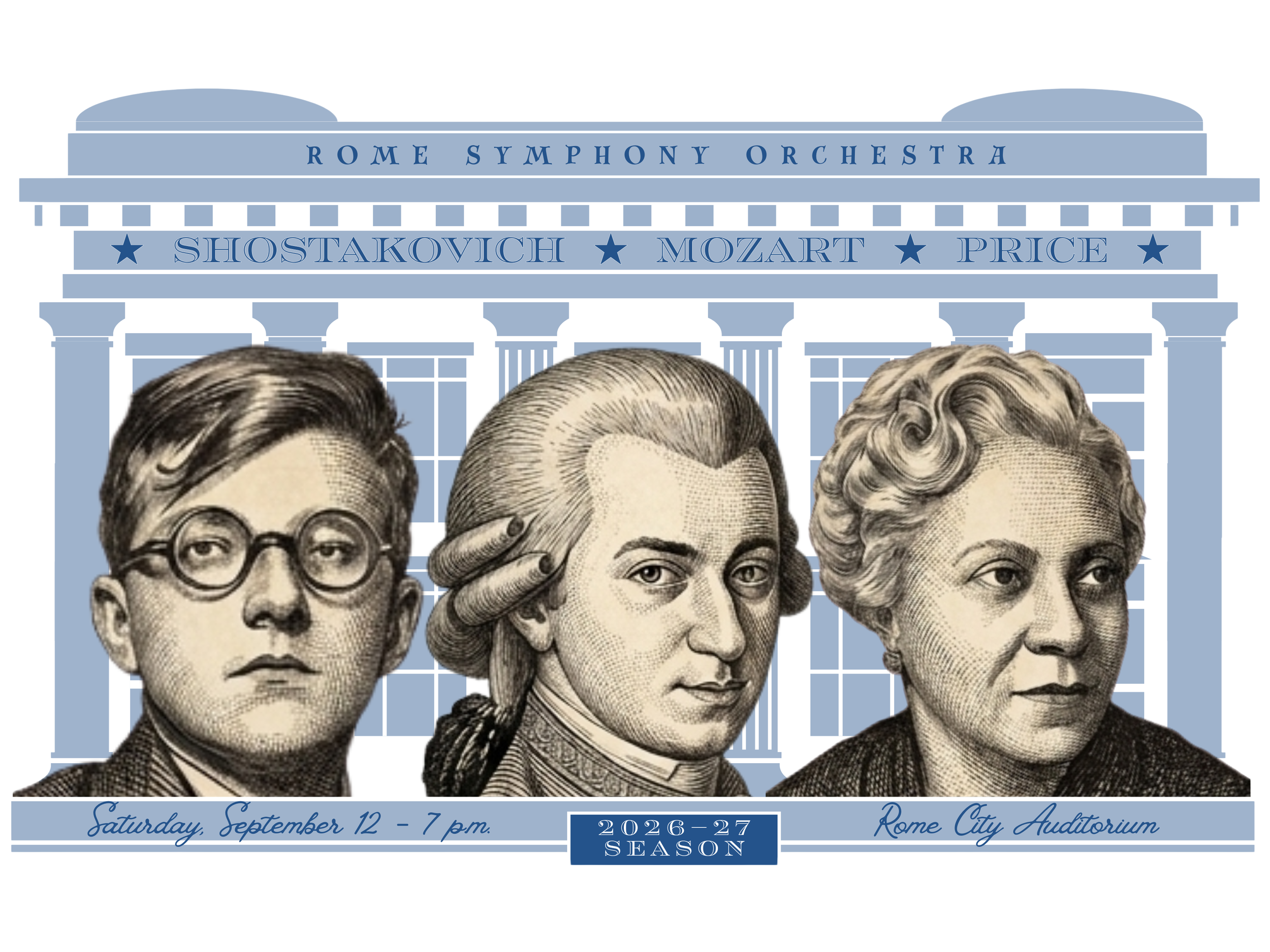
Our opening concert begins with Florence Price's Adoration, one of the composer's most beloved works. This year marks the 75th anniversary of the piece, making it the perfect time to celebrate the enduring legacy of one of America's most important musical voices. Elegant, heartfelt, and deeply expressive, Adoration remains as moving today as when it was first published.
From there, we turn to Mozart's Symphony No. 29, one of my favorite of his symphonies, and a work full of joy and genius. Written when Mozart was just 18 years old, it is filled with sparkling melodies, youthful vigor, graceful lyricism, and the unmistakable genius that would shape all classical music to come.
Our evening concludes with Shostakovich's Piano Concerto No. 2, featuring the exceptional Russell Woo as soloist. This beloved concerto is one of the composer's true masterpieces — overflowing with wit, virtuosity, and one of the most beautiful slow movements ever written. It is also a work that has not been heard in our region in many years, making this a rare opportunity to experience one of the great concertos of the 20th century performed live.
Whether you're a longtime subscriber or joining us for the first time, tonight’s concert is the perfect way to celebrate 105 years of magnificent music in Rome.
With gratitude and excitement,
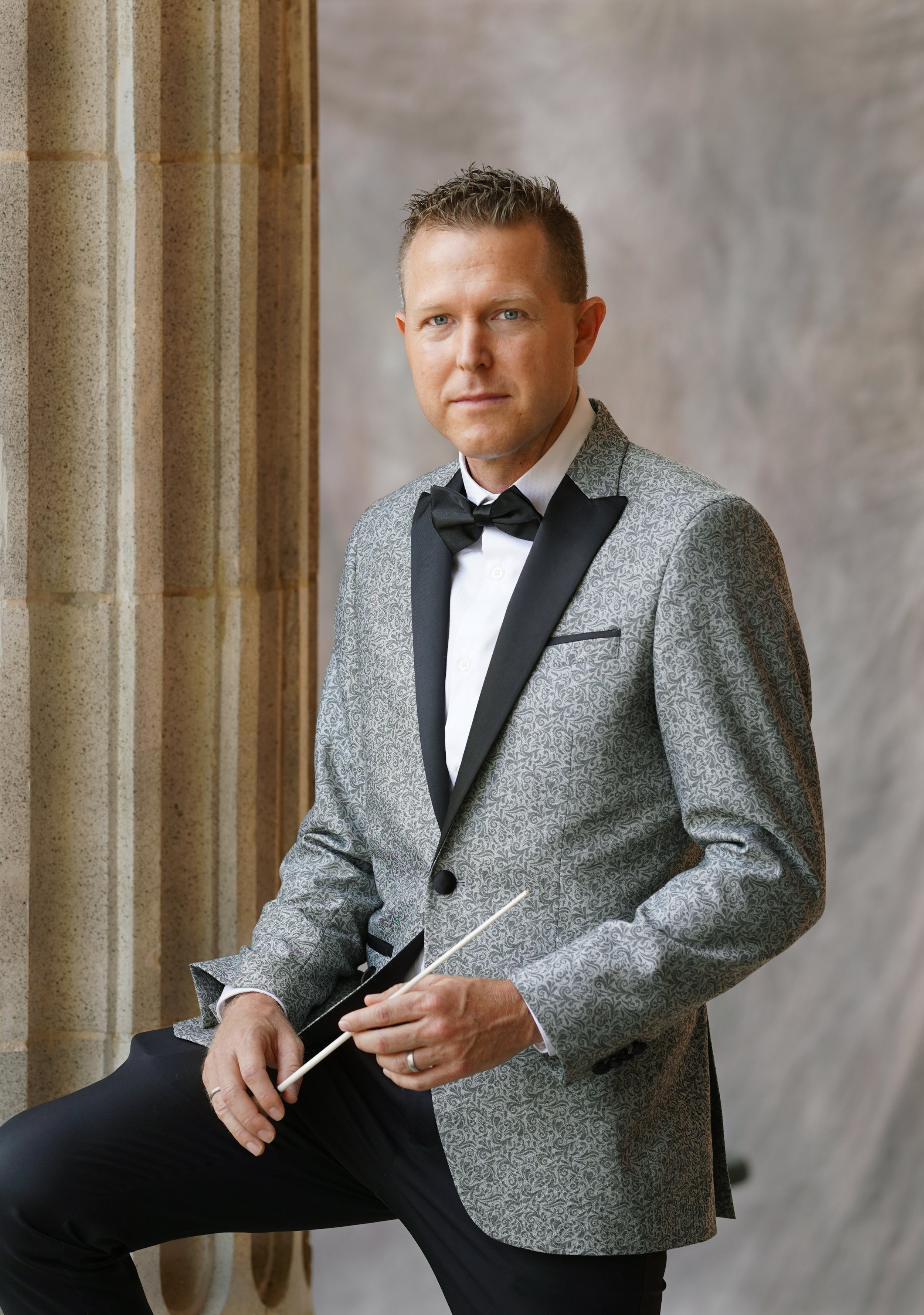
Jeffrey Sean Dokken
Music Director & Conductor
Rome Symphony Orchestra
GUEST Musician
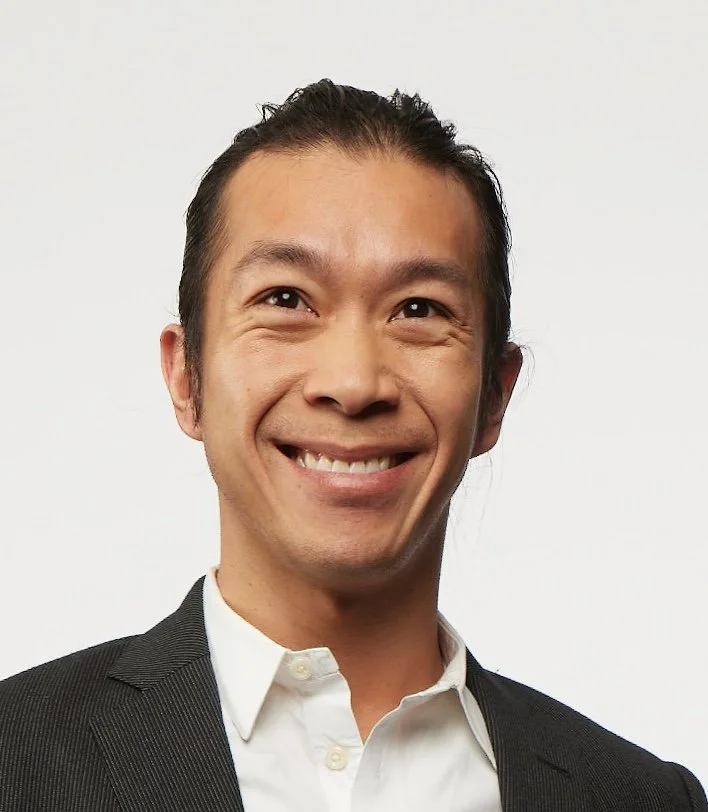
Russell Woo is an internationally recognized classical pianist celebrated for his expressive artistry, diverse tonal palette, and compelling musical storytelling.
With a Masters in Piano Performance from the Royal Academy of Music in London, England, he has performed solo, chamber, and orchestral works on distinguished stages across the globe, including recent appearances in the UK, Singapore, Austria, and across North America. Russell is no stranger to the Rome Symphony Orchestra, performing aerial silks and flying trapeze in the circus concerts in 2022 and 2024.
Beyond his virtuosic performances, Russell is deeply engaged in research on performance experience and music education, helping audiences forge more personal and meaningful connections with classical music. It is in this experimentation that Russell created Piano in the Sky, a patented aerial piano apparatus that reimagines the concert experience by combining musical excellence with breathtaking circus artistry and movement.
SEASON TICKETS
A Legacy in Sound — the RSO's 2026–27 season — is a masterful blend of heritage and innovation.
GRAB YOUR SEASON TICKETS TODAY!
Take advantage of all our 105th season has to offer with the purchase of RSO season tickets.
COMMUNITY PARTNERS


Official Wardrobe Provider of Maestro Dokken







2026-27
Season sponsors
MAESTRO ($15,000+)
Helen Dean Rhodes Memorial Level
Betty Wright Ledbetter
GUEST ARTIST ($10,000+)
Debra Everett-Dudley
Sylvia & Randy Eidson
CONCERTMASTER ($7,500+)
Louise A. Hoge Memorial Level
The City of Rome
ASSOCIATE CONCERTMASTER ($5,000+)
Ladre Combee Floyd Memorial Level
Emily Beals
PRINCIPAL MUSICIAN ($2,500 – $4,999)
Susi Edwards
Karen K. Smith
Barb & John Beninato
MUSICIAN ($1,000 – $2,449)
Kimberly & Andy Owens
Samantha & Wes Henderson
Amanda Hale
Lynn & Joel Todino
Roger Edens
Gayland Cooper
Dianne Hix
Donna Sweitzer
Patti & Mike Barron
Margaret & Michael Crego
Shelly & Jeffrey Peller
OVERTURE ($500 – $999)
Jeanne & Mark Krueger
Peter Hill
Helen & Dan Paracka
Mary Wollstein
Neema & Darshak Pandya
Judith & Larry Caywood
Marilyn & Ted Goodwin
CONCERTO ($250 – $499)
Arthur Nethery
David Jahner
Raymon H. Cox
Elisabeth Shelton
Jean Loveday
Linda & Sid Blankenship
Nolan Snead
Betty Zane Morris
Ann Pullen
ETUDE ($100 – $249)
Julie & Frank Windler
Lucy Coyle
Jim Ford
Sara Hiem
Beverly Copen
Jackie & Ben Harrison
Pauline & Daniel Goldfaden
2026 PLAY-ON! Contributors
MOZART ($5,000+)
Joanne Owens
Cheryl Huffman
Gayland Cooper
Julie & Frank Windler
Rick & Fran Buice
TCHAIKOVSKY ($1,000 – $4,999)
Rick & Sundai Stevenson
Andy & Kim Owens
Amanda Hale
Blanca & Raul Gonzalez
Jeanne & Mark Krueger
Peter Hill
Martha Cates
BRAHMS ($500 – $999)
Jeb Arp & Luke Chaffin
Janice & Allen Judd
Sam Moss
Marsha Rose
John Michael & Liz Tierney
Mark & Kim Tunnell
BEETHOVEN ($250 – $499)
Richard & Barbara Molnar
Tom & Cheryl Melton
Laurie Steber
Lucy Coyle
Sue Anderson
Arthur Nethery
David Jahner
Charles Shiflett
Carolyn Carpino
Katherine Smyth
BACH ($100 – $249)
Billy & Kathy Cooper
Carol Grajzar
Lora Lee Stewart
Marsha Dempsey
(In Memory of Wayne Dempsey)

PURPOSE
To enrich the musical culture of our community.
MISSION STATEMENT
The mission of the Rome Symphony Orchestra is to inspire, educate and entertain through excellence in musical performance.
VISION STATEMENT
The vision of the Rome Symphony Orchestra is to live in a community that is enriched by beautiful music.
706.291.7967
office@romesymphony.org